Lexington sits about 15 miles west of downtown Columbia in Lexington County, South Carolina. The town itself has a population of roughly 25,000, but the broader Lexington area — the zip codes, the communities, the parts of the county that feel like Lexington even if they technically are not — is considerably larger. It is one of the fastest-growing suburbs in the Columbia metro, and for good reason. Good schools, Lake Murray access, a downtown that is actually coming into its own, and home prices that still make sense compared to a lot of places people are moving from. But what does it feel like to live there day to day? That is the part the listing photos never quite capture.
The Vibe
Lexington has the kind of energy that comes from being a real town, not just a suburb. There is an actual downtown along Main Street and South Lake Drive — local restaurants, a few coffee shops, galleries, and the kind of shops that have been there long enough to feel like part of the furniture. Cafe Strudel is one of those spots where you will see people you know on a Saturday morning. The Hangar Provisions has become a regular for people who want something a little different. It is not a tourist downtown. It is a working one.
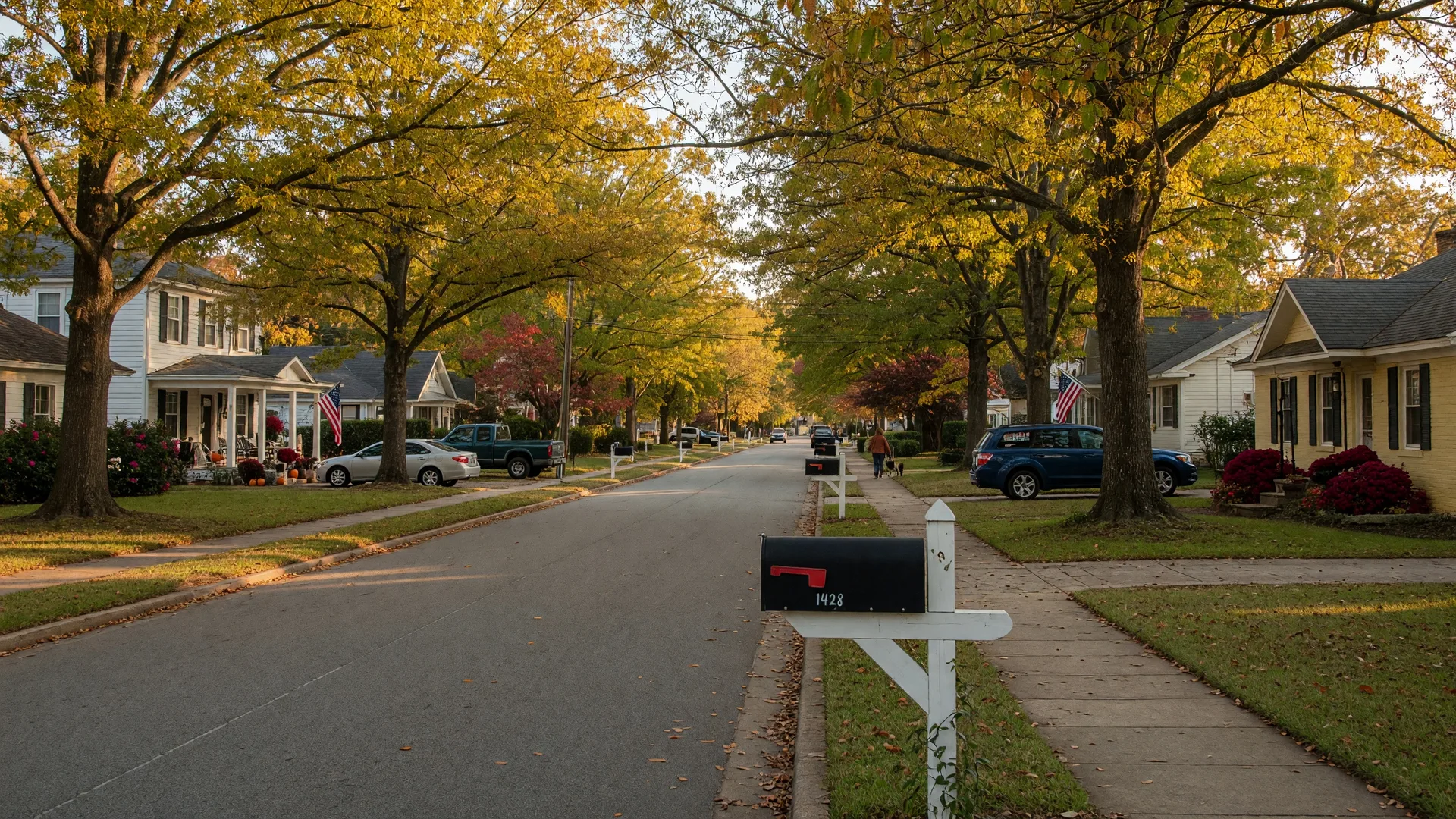
Outside of downtown, Lexington is what most people picture when they think of a comfortable Southern suburb: newer subdivisions with wide streets and sidewalks, shopping along the US-1 and I-20 corridors, grocery stores within five minutes of wherever you are. The town has been growing fast — new restaurants and businesses keep showing up — but it has not lost the feel of a place where people actually live, not just pass through.
The Schools
This is where Lexington tends to win people over, especially families relocating from out of state. The town is served by Lexington County School District One, which has 30 schools and is consistently one of the top-rated districts in the Columbia metro. River Bluff High School is ranked among the best public high schools in South Carolina on Niche, with a rating of 4.45 out of 5. Lexington High School is not far behind. Meadow Glen Elementary has been named the top-rated public elementary in Lexington County. The district overall earns strong marks — families specifically move to Lexington for this, and I have seen it drive entire neighborhood decisions.
If you have kids and school quality is a major factor, Lexington and Irmo are the two areas you will hear about most often. Lexington has a slight edge in terms of the number of options and the range of school sizes, which matters depending on what your kids need.
The Commute
The average commute from Lexington to downtown Columbia runs about 25 minutes. That is slightly shorter than the national average and shorter than what you get from Chapin or even parts of Irmo. Most people take US-1 or I-20. Rush hour can push that to 35 or 40 minutes on the worst days, but it is generally more manageable than the I-26 corridor on the other side of the metro.
One thing that surprises people: Columbia Metropolitan Airport is less than 10 miles from Lexington. If you travel for work or have family visiting regularly, that convenience adds up. It is a small airport — not a hub — but it gets you to Charlotte and Atlanta quickly, and those connect you to just about anywhere.
The Lake Murray Access
This is one of the things that sets Lexington apart from most of the Midlands. Lake Murray's eastern shoreline runs right along Lexington's back door. Jake's Landing is the closest marina to town — public boat ramps, storage, and the kind of place where you can launch on a Wednesday evening and be on the water before sunset. Lake Murray Public Park is just a few minutes further, with swimming, picnic areas, and room to spread out.
You do not have to live on the lake to enjoy it. Plenty of Lexington residents keep their boats at Jake's or Rocky Point and use them on weekends. If lake living is on your list but lakefront pricing is not, Lexington gives you proximity without the premium. That is one of the quieter advantages of being here.
The Outdoor Access
Outside of the lake, Lexington has more green space than most people expect. Virginia Hylton Park is a downtown gem — walking trails, a koi pond, a playground, and gardens that make you forget you are a block from Main Street. Gibson Pond Park is quieter, with a paved loop trail and good bird watching. The 14 Mile Creek Trail winds through suburban woods for about 3,500 feet and connects to an outdoor learning center.
The Lexington County Recreation and Aging Commission runs multiple sports complexes and leisure centers around town. If your kids play ball, swim, or do any of the usual suburban activities, the infrastructure is here and it is well-used.
The Neighborhoods
Lexington has a wide range of neighborhoods, which is part of why it fits so many different buyers. Saluda River Club and Golden Hills tend toward the higher end — larger lots, resort-style amenities, and the kind of finishes that show up in magazine spreads. Hammock Bay, Mallard Hills, and Summerlake are more mid-range and family-oriented, with good schools feeding in and the kind of streets where kids ride bikes. Turners Pointe sits along the lake with waterfront and water-access options. Downtown Lexington has a few older homes with character if that is your thing. Most neighborhoods are newer construction, built within the last 15 to 20 years, with the HOA structure and community feel that comes with that.
The Price Point
As of mid-2026, the median home price in Lexington sits in the $300,000 to $325,000 range, with the median around $298,000 to $310,000 depending on the source and the exact area. Prices have been trending upward — roughly 9 to 10 percent over the past year — which tells you demand is real. For a newer four-bedroom in a family-oriented neighborhood, expect somewhere in the $320,000 to $400,000 range. Lakefront properties along Lake Murray run considerably higher, starting around $350,000 for modest places and going up from there.
Compared to Chapin, you get more proximity to the city and a wider range of shopping and dining. Compared to Irmo, you get a slightly stronger downtown and closer lake access. Compared to downtown Columbia, you get space, a yard, and one of the better school districts in the state without paying a premium for a zip code that does not come with one.
Who Lexington Is Right For
Lexington works well for families with school-age kids who want strong schools without a long commute. It works for people relocating to the Midlands who want Lake Murray access and a growing downtown without paying lakefront prices. It works for remote workers who want space and a yard with good infrastructure around them. And it works for retirees who want to be near the action without being in the middle of it — close enough to Columbia for dining and entertainment, close enough to the lake for weekends.
It is not the right fit if you want true walkability everywhere or a 10-minute commute to an office downtown. Lexington is still a car-dependent town, even with the improving downtown. That is the trade-off, and it is worth being clear about before you commit.
If you are trying to figure out whether Lexington fits what you are looking for — or if it stacks up against Irmo, Chapin, or somewhere else in the Midlands — I am happy to talk it through. I have been selling homes in this area for nine years, and 152 closings later, I have seen what works and what does not. A quick conversation can save you a lot of time looking in the wrong direction.

Jill Hydrick
REALTOR® with EXIT Real Estate Consultants · SC License #102864
Nine years in real estate, 34 years in accounting. She knows the Midlands and she will tell you the truth about it.