Is retiring in South Carolina as good as everyone says?

Jill Hydrick
July 20, 2026
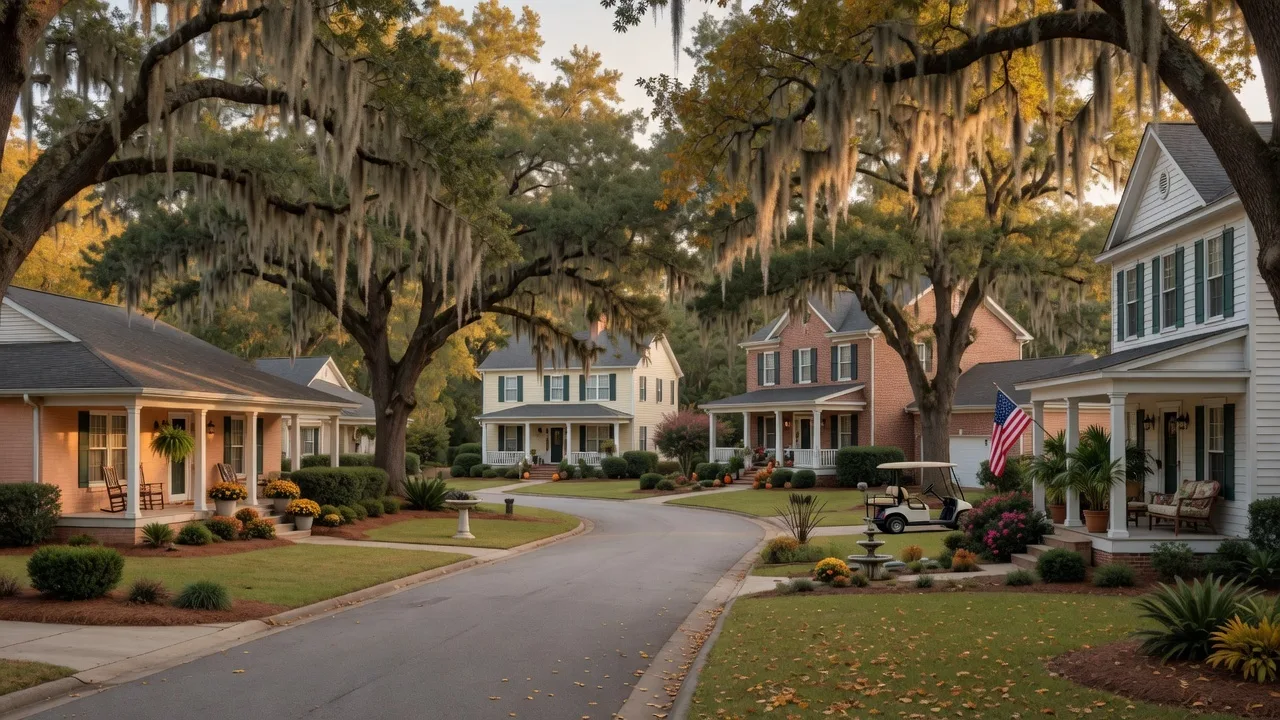
I get this question a lot. Someone has been doing the math on their retirement spreadsheet, and South Carolina keeps coming up as one of the top states on those "best places to retire" lists. But lists are lists, and real life is different. So let me give you the honest version of what retiring in the Columbia SC area actually looks like, based on nine years of working with people who did exactly that.
The tax situation is genuinely good
I will start with the most common reason people look this way. South Carolina does not tax Social Security benefits at all. Not partially. Not with an income cap. 100% of your Social Security is exempt from state income tax, no matter how much you receive. That alone makes the math work better than a lot of northern states.
On top of that, the state gives you a deduction of up to $10,000 per person on retirement income once you are 65 plus pensions, 401(k) and IRA withdrawals. If both spouses are 65 or older, that combined deduction can reach $30,000. And the top state income tax rate dropped to 5.21% in 2026, down from 6.5%. For someone retiring from New York, New Jersey, or California, those numbers add up fast.
Property taxes are another big one. Lexington County's effective property tax rate for primary residents is roughly 0.56%, compared to a national average over 1%. On a $350,000 home, that is about $1,960 per year. In New Jersey, the same home might cost you $7,000 or more annually. And if you are 65 or older, the homestead exemption knocks another $50,000 off your home's assessed value before the tax rate applies.
The climate is a trade-off, not a perk
This is the part I try to be really honest about. Winters here are genuinely mild. January averages a high of 56 degrees and a low around 37. You might see snow once every few years, and it melts by lunch. If you have spent decades shoveling a driveway in Buffalo or scraping ice off a windshield in Boston, you will notice the difference immediately.
But summers are not subtle. July averages a high of 92 degrees with humidity that sits on you. You will run your air conditioning from May through September, no exceptions. If you have a heart condition or respiratory issues, the heat and humidity matter. I do not say that to scare anyone off. I say it because I have seen people move down here in October, fall in love with the weather, and then wonder why they are miserable in August. You want to visit in July before you commit. Not March.
On the plus side, the state averages about 218 days of sunshine a year. You can sit on a porch or a dock for most of the year comfortably. The outdoor season for boating, gardening, golf, and walking is long. Lake Murray does not freeze over. That matters to a lot of people.
The cost of living is not just cheaper. It changes what retirement looks like.
The numbers are hard to argue with. According to recent comparisons, a retiree in South Carolina needs roughly $860,000 in savings to cover annual expenses, compared to about $1.38 million in New York. That is half a million dollars less you need to accumulate, which for a lot of people means retiring earlier than they thought possible.
Housing is where you feel it most. The median home price in the Columbia area sits around $259,000. For $300,000 to $400,000, you get a solid three-to-four-bedroom home on a decent lot in a good neighborhood. In Lexington or Irmo, you can be in a top-rated school district, close to Lake Murray, 15 miles from a capital city, and still have a mortgage payment that is a fraction of what you were paying up north. When I have clients run that comparison, the numbers usually speak for themselves.
Healthcare access is solid, with a caveat
Columbia has three major hospital systems: Prisma Health, Lexington Medical Center, and the University of South Carolina School of Medicine. Lexington Medical Center is consistently ranked among the top hospitals in South Carolina. For routine care and common specialties, you are well covered.
The caveat is that if you need a super-specialist or a specific treatment protocol, you may end up driving to Charleston, Charlotte, or even Atlanta. That is around two hours. It is not a dealbreaker for most people, but it is worth knowing. I have had clients ask about this specifically, and I think it is better to know upfront than to discover it later.
The social side of retiring here
This is the part that is harder to research online. How easy is it to actually build a life here after 60?
The honest answer is that it depends on where you land. Lexington has a strong retiree community. There are active social clubs, church groups, volunteer organizations, and lake associations. Chapin is smaller, quieter, and the social circle tends to revolve around the lake and local gatherings. Irmo has more family-oriented neighborhoods with a mix of ages. Columbia itself has retirees connected to the university and the arts community.
What I see most often is that people who move here and make an effort to get involved do fine. The ones who struggle are the ones who assumed a neighborhood would do the social work for them and stayed inside. South Carolina is friendly. People talk to each other. But you have to show up.
Who this move is right for
If you are retired or close to it, and you are leaving behind a cold climate, high property taxes, and a cost of living that eats up more of your fixed income than it should, the Columbia area makes a lot of sense. The combination of tax benefits, lower housing costs, and milder winters is real. It is not just a marketing line.
It is also a good fit if you want to be close to grandchildren in the area, or if you want a lower-cost base that lets you travel more. I have clients who bought a home in Lexington, pocketed the equity from their New Jersey house, and now spend three months a year in Florida or visiting family. They changed their lifestyle, not just their address.
It is not the right fit if extreme heat bothers you, or if you need a packed urban environment with museums and theater at every corner. Columbia has culture, but it is not New York or Chicago. It is a mid-sized Southern city with a college-town energy, good food, and a slower pace. Some people love that. Some people realize six months in that they miss the noise.
I have been doing this for nine years now, and I have helped 152 households make the move to the Midlands. A good number of them were retirees. What I hear most often is not "I wish I had stayed" but "I wish I had done it sooner." The numbers work, the quality of life is real, and the transition gets easier when you have someone who will tell you the truth about what you are walking into.
If you are thinking about it, the best thing you can do is come see it for yourself. Not in a rush, not on a tight weekend. Give yourself a few days, drive the neighborhoods, sit by the lake, eat at the local spots. I am happy to help you figure out which parts of the Midlands fit what you are looking for.
Jill Hydrick
REALTOR with EXIT Real Estate Consultants · SC License #102864
Nine years in real estate, 34 years in accounting. She knows the numbers and will tell you the truth about what moving here actually looks like.
Warm regards, make it a great day.
Talk to Jill